Backcountry Water Filters: Build a Treatment Routine
Match filters, purifiers, containers, and backup treatment to your water sources and destination. This guide turns the decision into a practical plan for an ordinary trip, with clear tradeoffs and no invented field-test claims.
Affiliate disclosure: This page may contain retailer links. If a tracked affiliate link is active and you purchase through it, Hike Kit Guide may earn a commission at no extra cost to you. Recommendations are independent and prices are never assumed to be current.
Jump to section
The trail scenario
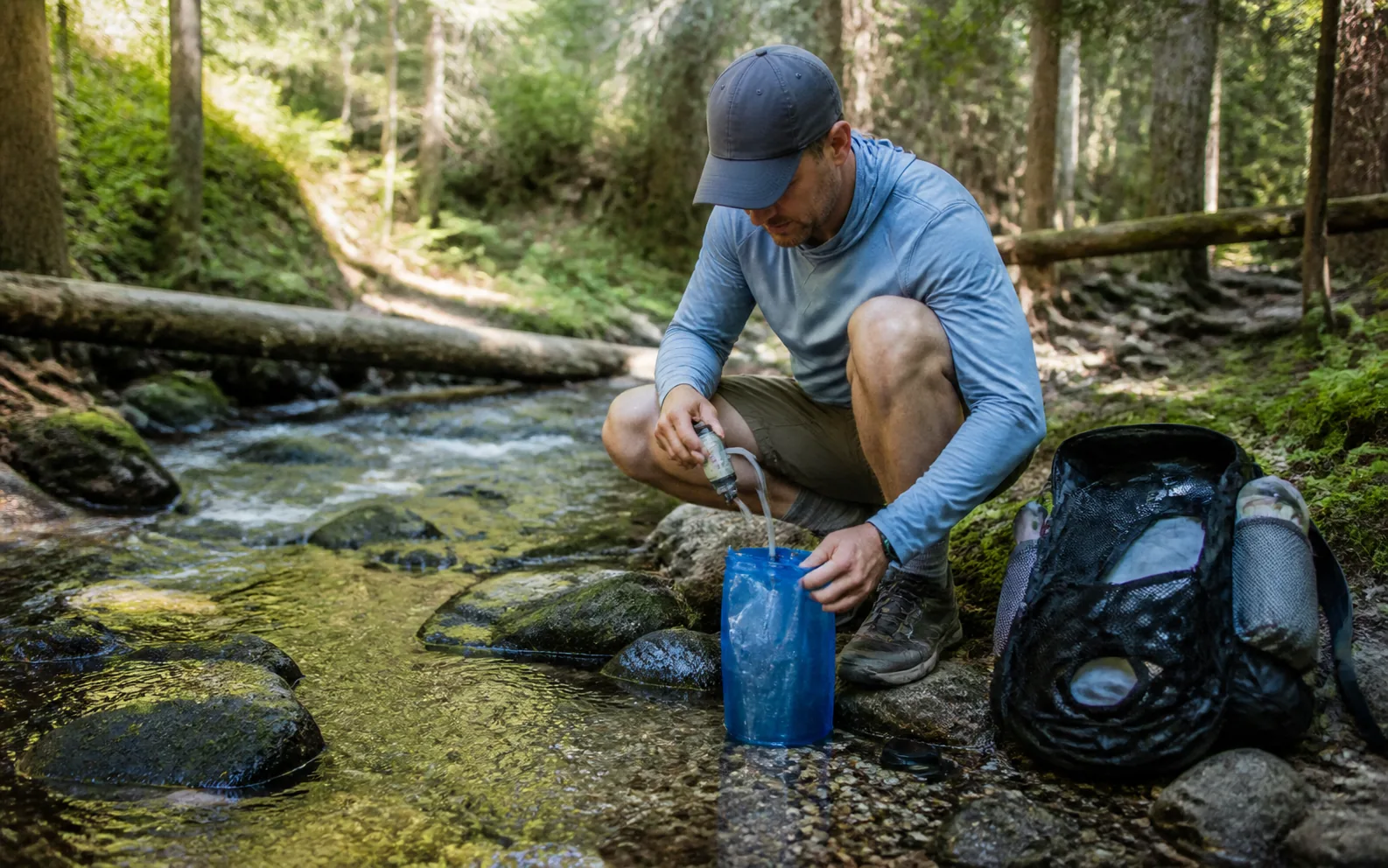
The spring marked on the map is a shallow pool with sediment at the edge. The treatment system now has to handle dirty collection, pre-filtering, careful clean-water handling, and enough storage to reach the next reliable source.
That scene is the editorial filter for this guide. Specifications are useful only when they help with comfort, safety, access, durability, or a simpler routine. We separate those useful signals from features that mainly make a product page look busy.
Buying priorities
Know the hazard
Many common hiking filters target protozoa and bacteria but not every contaminant or virus. International travel and heavily impacted sources may require a purifier or combined approach.
Flow and maintenance
Fast flow is useful only if it remains maintainable. Learn the exact backflushing, cleaning, or cartridge routine before the first remote trip.
Dirty and clean separation
Label containers and avoid letting untreated threads or hoses contact finished water. Small handling mistakes can undo effective treatment.
Use these priorities in order. If an option fails the first requirement, a lower weight, brighter color, or promotional price does not rescue it. Write the tradeoff down before buying so the final choice remains connected to the trip.
Practical options
Squeeze filter system
Best forSolo and small-group backpacking
Field-cleanable element and compatible bags or bottles
TradeoffBags can be awkward in shallow water
Gravity filter
Best forPairs, families, and camp-based trips
Clear dirty/clean labeling and practical hose length
TradeoffMore pieces and slower setup while moving
Purifier or combined system
Best forTravel where viral risk may be a concern
Published treatment scope and replacement schedule
TradeoffHigher cost and more maintenance
Merchant and official links open in a new tab. Hike Kit Guide does not display a price unless there is a reliable update process, so confirm current availability, specifications, shipping, and returns at the destination.
Field checklist
- Research destination-specific treatment guidance
- Carry a backup tablet or boil plan
- Pack extra water capacity
- Label dirty components
- Dry and store the filter as instructed
Run this checklist at home, then once again at the trailhead or accommodation. A short repeat catches the forgotten charger, unfilled bottle, loose strap, or access notice that can change the day.
Mistakes and field notes
Avoid these mistakes
- Assuming clear water is safe
- Allowing a wet filter to freeze
- Cross-contaminating bottle threads
Use it well
- Collect upstream from obvious disturbance when possible.
- Let sediment settle or pre-filter very cloudy water.
- Sleep with a wet hollow-fiber filter in freezing conditions so it does not ice.
Good equipment reduces friction, but judgment still determines the margin. Conditions, regulations, fit, and personal needs can change after this article is published. Recheck the linked primary source and make the conservative choice when the situation differs from the guide.
Frequently asked questions
What matters most when using this buying guide?
A filter is only one step. Know the risks at your destination, protect the clean side, carry a backup method, and have enough container capacity for dry stretches.
Should I buy the lightest option?
Only if it still fits the conditions and your routine. Reliability, comfort, weather protection, and simple operation usually matter more than saving a small amount of weight.
How should I make the final choice?
Write down the conditions you expect, the load or duration involved, and the one tradeoff you are willing to accept. Compare current specifications and return policies before ordering.
Sources and update note
Last checked: 2025-01-10
We use official land-manager, route, manufacturer, or current retailer information where available. External pages can change.