Trekking Poles Explained: Locks, Grips, and Trail Feel
Choose poles for the terrain, your hands, and the way you travel—not for a tiny weight difference. This guide turns the decision into a practical plan for an ordinary trip, with clear tradeoffs and no invented field-test claims.
Affiliate disclosure: This page may contain retailer links. If a tracked affiliate link is active and you purchase through it, Hike Kit Guide may earn a commission at no extra cost to you. Recommendations are independent and prices are never assumed to be current.
Jump to section
The trail scenario
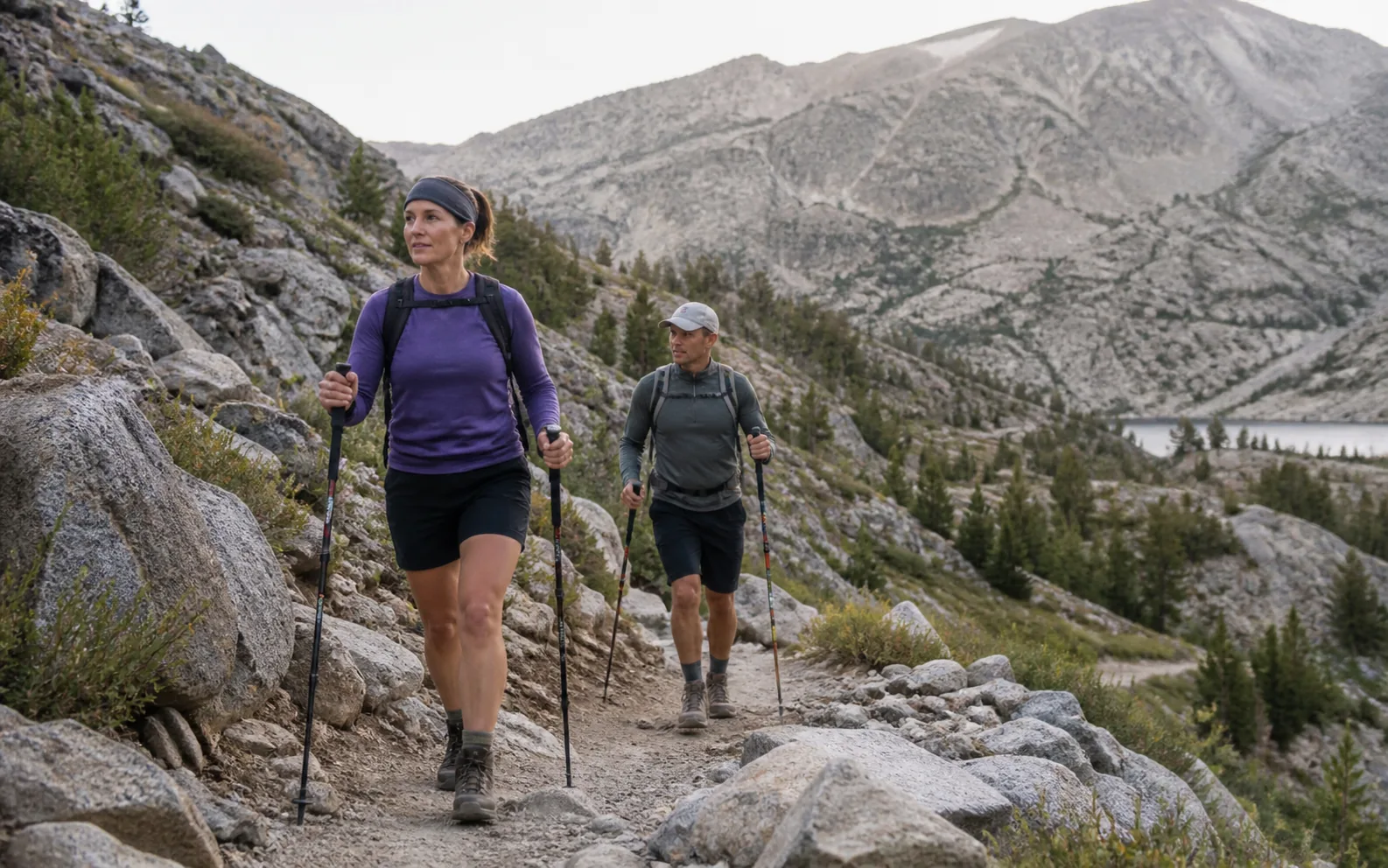
On a long descent, poles are less about speed than rhythm and confidence. They help probe loose ground, spread effort, and steady a careful step when rain has polished roots. The wrong grip or a slipping lock becomes obvious long before the trail ends.
That scene is the editorial filter for this guide. Specifications are useful only when they help with comfort, safety, access, durability, or a simpler routine. We separate those useful signals from features that mainly make a product page look busy.
Buying priorities
Lock reliability
External lever locks are easy to inspect and adjust. Twist systems can pack cleanly but demand more careful maintenance. Whichever style you choose, practice setting it before a trip.
Grip shape and material
Cork can feel calm over long days, foam offers broad comfort, and rubber suits cold or occasional use. The grip should not force your wrist into an awkward angle.
Collapsed length
Travelers should compare folded dimensions with carry-on and pack storage. A pole that is awkward to transport may stay at home, regardless of its trail performance.
Use these priorities in order. If an option fails the first requirement, a lower weight, brighter color, or promotional price does not rescue it. Write the tradeoff down before buying so the final choice remains connected to the trip.
Practical options
Aluminum telescoping pair
Best forBeginners and rocky, regular use
Simple lever locks and replaceable tips
TradeoffMore weight than premium carbon models
Carbon telescoping pair
Best forLong-distance hikers who value swing weight
Reinforced joints and a sensible warranty
TradeoffHigher cost and less tolerance for side impacts
Folding travel poles
Best forFlights, fast hiking, and compact storage
A secure deployment button and suitable length range
TradeoffLess adjustment range on some designs
Merchant and official links open in a new tab. Hike Kit Guide does not display a price unless there is a reliable update process, so confirm current availability, specifications, shipping, and returns at the destination.
Field checklist
- Size poles with elbows near a right angle on level ground
- Shorten slightly for long climbs
- Lengthen slightly for sustained descents
- Carry spare tip protectors when traveling
- Rinse and dry sections after muddy trips
Run this checklist at home, then once again at the trailhead or accommodation. A short repeat catches the forgotten charger, unfilled bottle, loose strap, or access notice that can change the day.
Mistakes and field notes
Avoid these mistakes
- Using wrist straps incorrectly
- Over-gripping on every step
- Buying a folded pole that does not fit your luggage
Use it well
- A relaxed hand reduces fatigue; the strap should support the heel of the hand rather than trap the wrist.
- On contouring terrain, shorten the uphill pole or hold below the main grip.
- Pack poles inside or securely against luggage for flights so baskets and tips cannot snag.
Good equipment reduces friction, but judgment still determines the margin. Conditions, regulations, fit, and personal needs can change after this article is published. Recheck the linked primary source and make the conservative choice when the situation differs from the guide.
Frequently asked questions
What matters most when using this buying guide?
Reliable locks and comfortable grips matter most. Pick a packed length that works with your luggage or backpack, then choose durability or lower weight according to how rough your routes are.
Should I buy the lightest option?
Only if it still fits the conditions and your routine. Reliability, comfort, weather protection, and simple operation usually matter more than saving a small amount of weight.
How should I make the final choice?
Write down the conditions you expect, the load or duration involved, and the one tradeoff you are willing to accept. Compare current specifications and return policies before ordering.
Sources and update note
Last checked: 2025-09-13
We use official land-manager, route, manufacturer, or current retailer information where available. External pages can change.